
The Arsenal Insurance team consists of about a thousand people with divisions all over Ukraine. The head office employs over 150 people in more than 10 departments — including lawyers, financiers, accountants, programmers, and specialists in various fields.
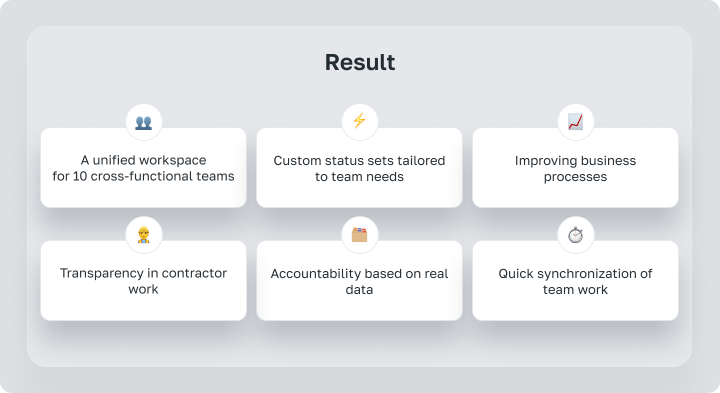
Each team managed projects in their own way. Aligning shared tasks took a lot of time and required constant clarifications. By migrating all teams to Worksection, the company optimized its internal processes and communication with contractors. Custom task statuses and labels brought order to how the cross-functional teams work together.
About the Company
Arsenal Insurance is one of the leading insurance companies in Ukraine. It ranks in the top 5 by the size of insurance premiums among all non-life insurers in Ukraine.
The company has been operating for 20 years and has over 350,000 clients — from individuals to large businesses.
As of June 2025, it’s #1 on the CASCO market by insurance premiums.
The volume of insurance payouts exceeds 7 million UAH per day.
Annual turnover — 5 billion UAH.
It has physical offices in 29 cities across Ukraine.
Request
Before implementing Worksection, each department of Arsenal Insurance used various tools for project management. One team preferred to work in chats, another in Excel, and a third communicated via email. This complicated interaction and coordination among teams.
The head office of the insurance company has tasks that require simultaneous involvement of different teams. Each has its own area of responsibility that needs to be completed, approved, and handed over to the next department.
For example, the company undergoes an audit and receives compliance certification. Lawyers prepare documentation, the finance department compiles reports, and the IT department adapts the infrastructure to new requirements. At every stage, it is important that the information is passed on correctly and on time.
Without a structured workflow, this turned into endless clarifications about how productive the teams were. The company also frequently brings in external contractors, whose tasks need to be monitored.
The primary request of Arsenal Insurance was to unite all teams in the head office and external contractors in a single project management system.
“When you have one task as the core that breaks down into subtasks with deadlines, budgets, and so on — it’s convenient” — Kostyantyn Palazov, CDO of Arsenal Insurance
Client Challenges
Synchronizing cross-functional teams
Problem: New requirements from the market regulator affected the operations of every insurance company. Adapting to them caused sweeping changes. The changes affected every department — from lawyers to developers. This created a need to bring different teams together into large shared tasks for implementing the changes.
“Much of the operational work involves adjusting business processes. All tasks and changes need to be managed in one place” — Kostyantyn Palazov, CDO of Arsenal Insurance
Managers needed to see the progress of departmental work. The lack of accountability based on current data complicated plan adjustments and decision-making.
Solution: The company gradually connected various departments of the head office to Worksection for collaborative work. A Worksection manager ran a one-on-one consultation for department heads. The meeting helped adapt the system to business needs.
“We quickly reviewed the product in half an hour. We understood how the system works quite easily. We wrote down instructions for the rest of our colleagues” — Kostyantyn Palazov, CDO of Arsenal Insurance
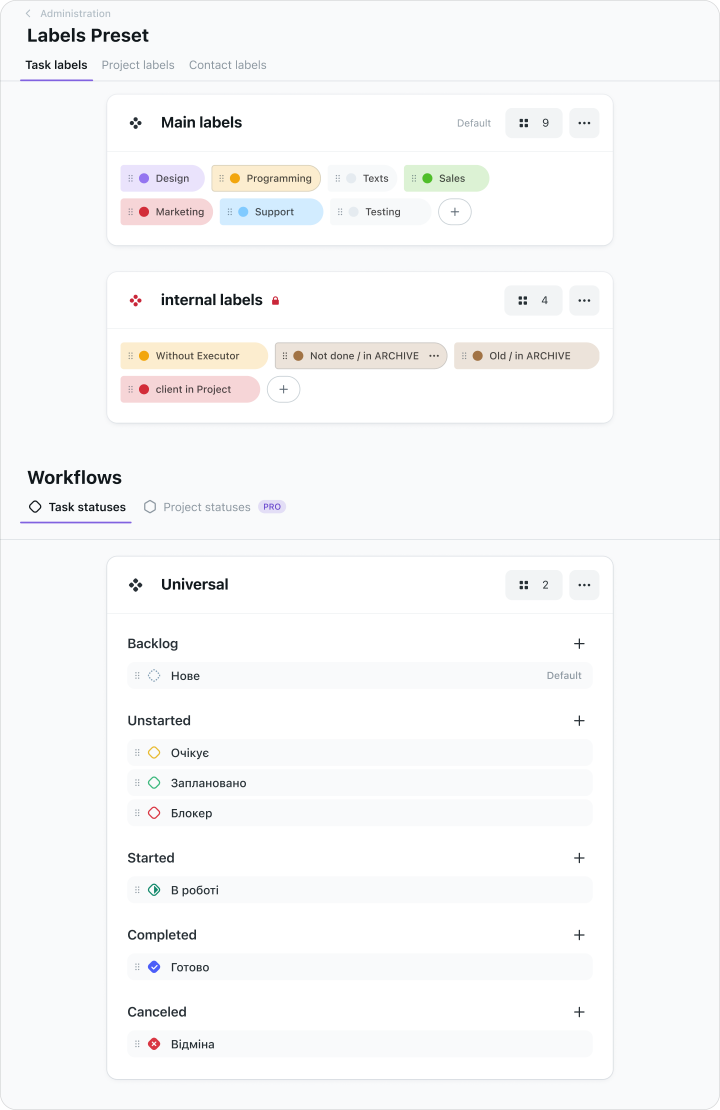
After that, each department began to customize their workspace according to their needs. Teams added customized sets of statuses, set up labels to indicate work areas, and began to create tasks. This helped structure cross-functional processes and simplify interaction between departments.
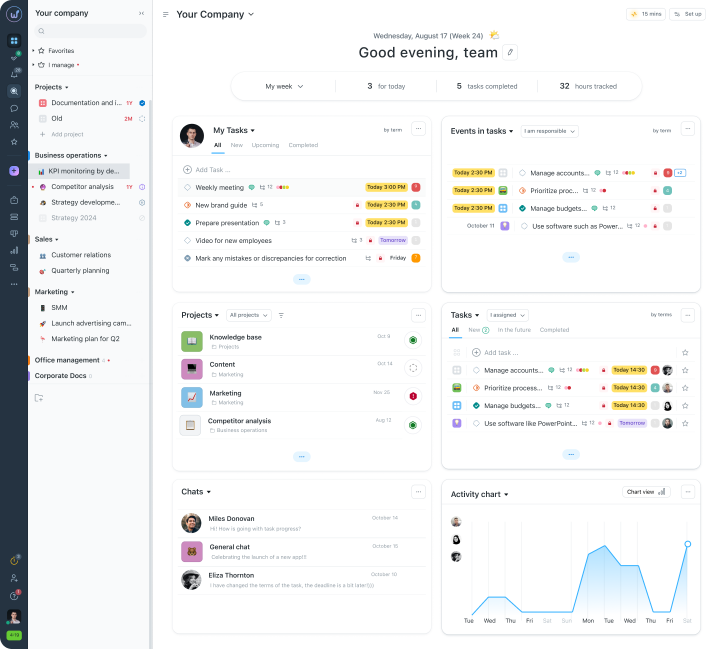
All departments of the insurance company transitioned to Worksection. As a result, it became easy and quick to coordinate complex tasks and respond promptly to changes in projects.
Customizing work processes
Problem: Teams worked without defined deadlines. It was difficult to track which tasks were in progress, which were awaiting approval, and which were done. This led to confusion and slowed the teams down.
Solution: The implementation of custom statuses helped structure tasks from delivery to evaluating the results. Now each team has its own set of statuses. The use of statuses in conjunction with filters significantly simplified navigation. Teams can sort tasks by type, assignee, and deadline.
Collaborative teamwork
Problem: Each team used its own tool for work. Information about projects was scattered between emails, chats, and documents, which created additional chaos. Difficulty in coordinating processes between departments hampered decision-making.
“Many small and large tasks. One team can work simultaneously on several projects. This cross-functionality requires a flexible tool to monitor progress in one place” — Kostyantyn Palazov, CDO of Arsenal Insurance
Solution: Storing information and updates on tasks in one place. Now every employee has a list of tasks with deadlines. Each manager can review the status of all department tasks in just a few minutes.
Discussions about work are tied to specific tasks, and access to information is controlled by managers. For example, contractors and partners see only the data relevant to their work.
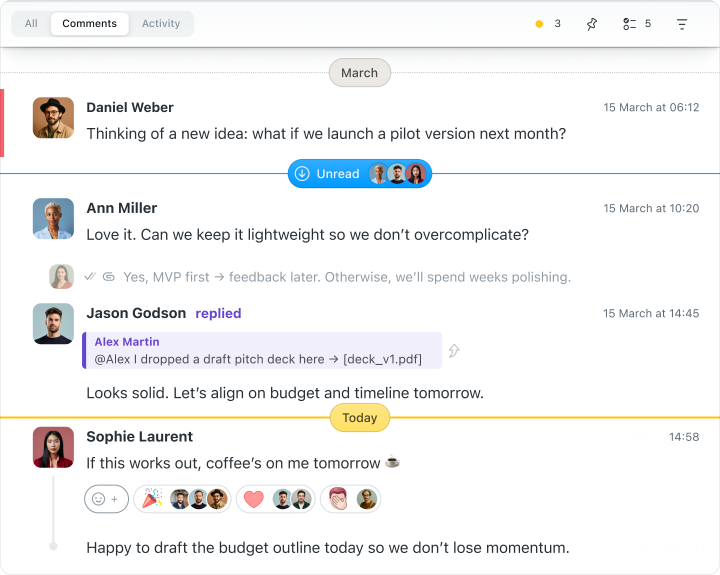
“All tasks, discussions, and files are stored in one place. You can always quickly find what you need, rather than endlessly searching for files in various chats” — Kostyantyn Palazov, CDO of Arsenal Insurance
Organizing work with contractors
Problem: Using chats combined with Google Sheets to communicate with contractors, instead of a single tool. Tasks would get lost among messages, and the status of the work had to be constantly clarified by hand.
Solution: Transferring work with contractors to Worksection and using Task board to track the progress of work.
What it looks like:
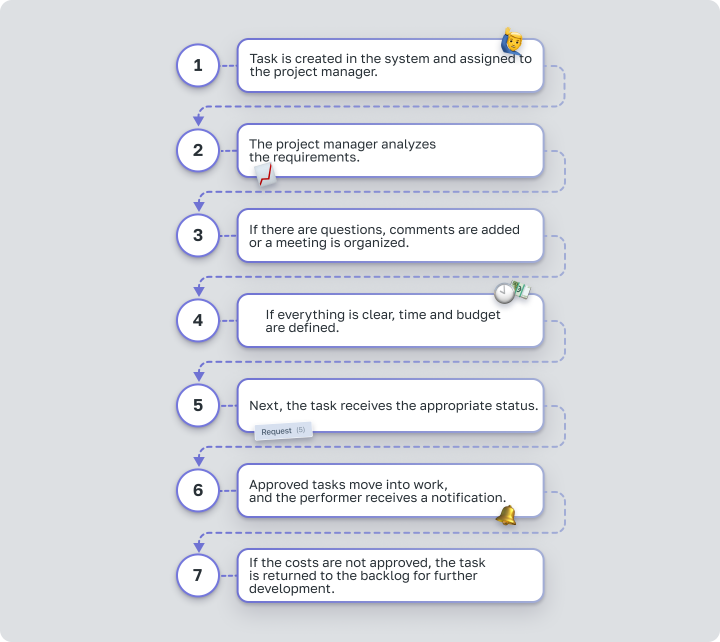
This way, it’s easy to find all tasks that are in progress or waiting to be done.
“All our contractors work through Worksection. Even IT companies that use Jira or other tools within their teams” — Kostyantyn Palazov, CDO of Arsenal Insurance
Organized accountability
Problem: To check the remaining budget and the status of annual plan execution, a lot of time was spent searching for information from various sources. This complicated process monitoring.
Solution: Exporting data from Worksection to Excel helped structure task planning for the year and allocate budgets by project. This made it easy for managers to keep track of the execution of the annual plan and quickly adapt to changes.
Thanks to this, it is now possible to:
- Track progress on each project.
- Analyze which budgets have been executed and which need correction.
- Make timely decisions: increase the budget, suspend part of the work, or change priorities.
“If a business has many parallel projects, it’s difficult to manage all processes without Worksection. It’s a necessary tool for controlling deadlines and monitoring external contractors” — Kostyantyn Palazov, CDO of Arsenal Insurance