Irina Shadeyko is a Brand Manager at Danone Nutricia in Ukraine. Irina’s team iworks on developing the Nutrilon brand — a breastmilk substitute and baby milk porridge.
About Danone Nutricia:
- Over 120 years of expertise in baby nutrition;
- Its own research centers in the Netherlands, France and Singapore with more than 400 researchers;
- The company’s products are available in more than 70 countries;
- In 2007 Nutricia became part of Danone.
I joined the company and got handed “thousands” of Excel files
When I first joined the company, I was handed “thousands” of Excel files with all sorts of statuses from different employees. It was impossible to tell what was going on. It was hard to structure the information and keep track of tasks that were just “raining down” on us from every direction.
At the same time, many projects had broken deadlines. Many projects required additional attention. Priorities were unclear. But I needed to compose a general pattern somehow. Then it was decided to look for a tool which would enable us to track everything occurring in our team’s projects.
We carried on working in Excel and tried to keep up the spreadsheets we’d been handed. We quickly realized that it did not work.
What else was difficult in Excel:
- It was not possible to write comments. It was difficult to understand at which stage the task was, its status etc.
- It was impossible to upload documents.
- To keep an Excel file updated, we’d have had to put someone in charge of it separately. That was difficult and inefficient..
Our next solution was Google Docs, but that stage did not last for long. Information started getting lost in Google Docs, we forgot to log tasks, and there was no way to track progress We ended up having the same problems as in Excel’s offline version.
At that time, we discovered Worksection and decided to give it a try.
On Friday, we decided to operate this system, and on Monday we started using it.
How did you integrate Worksection?
It was very convenient and swift. On Friday we decided to integrate Worksection, and on the weekend we transferred to the task manager all tasks we had in Excel, and, starting from Monday, we took advantage of it.
It is convenient that we can create a group of tasks in Worksection rather than transferring each task separately. As we had them structured in a definite way, we quickly transferred them into the system.
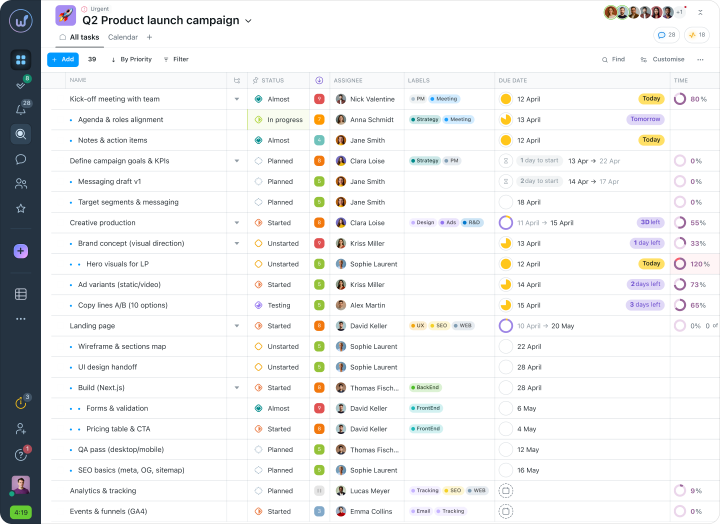
To make working in Worksection simple and convenient for everyone, we sat through a 30-minute intro session. A Worksection rep walked the team through the main tasks, the functionality, and the extra features.
What do you like in operating Worksection?
Primarily, you can use it as a simple functionality for creating task-based progress (deadline) tracking, as well as for more complex functions, such as Gantt chart and task boards.
With the Gantt chart, it is convenient to view the project as a whole: we track the progress by tasks, as well as links between them and the general timing of the project. It lets us understand how a delay at any stage of the project affects all the project’s deadlines.
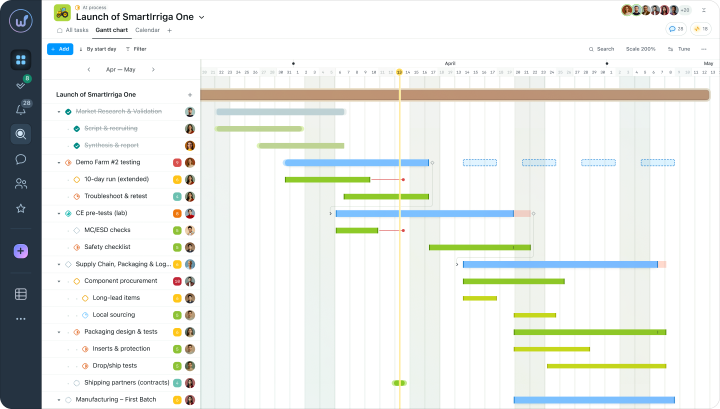
It’s very important, because [we don’t always understand the role a given task plays in the overall timeline. It is important for every person involved in the project to view the full picture.
What I personally like about Worksection is that it suits both small teams with a limited number of projects and large companies. In other words, you can scale up and create as many projects as you need.
Right now, everyone in Worksection sees the information they need: the owner sees the full picture across all projects, while employees see the overall picture of the projects they’re involved in.
What else is convenient in Worksection?
We do not lose any tasks or information. Of course, we maintain email communication in parallel. We often solve tasks in different messengers.
It is convenient that Worksection enables setting a task even for the end of a year.
For example, now we know that in 6 months we will have to control a certain task. In which notebook should we write it not to forget about it then? Notebooks may get lost over this time. Managers may be replaced. Anything may happen. But Worksection will remind us to fulfil the task when the time comes.
Prioritizing tasks in Worksection
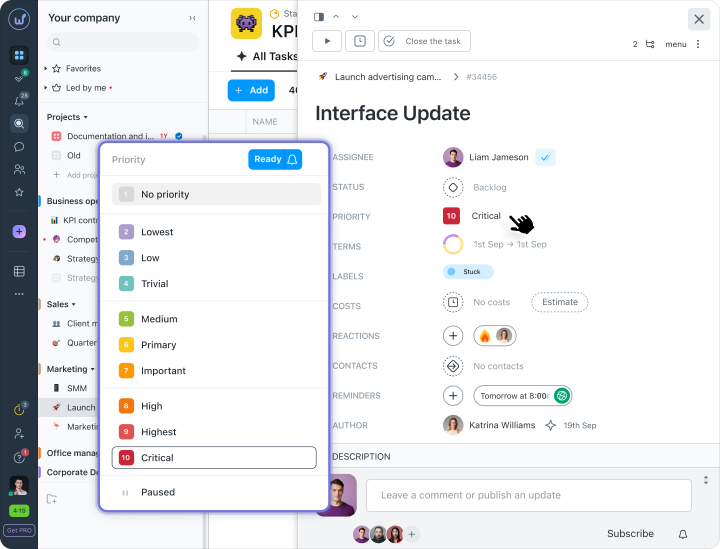
Every morning, we receive digests showing our daily priorities. We assign a priority to every task, thus, if we have five tasks with deadlines expiring today or tomorrow, we know which one should be the first to be tackled.
How did your team respond to Worksection integration?
Before the introduction, we did a certain work to instruct every team member about the purpose of introducing this system. It was important to me that everyone understood that Worksection is meant to make organizing our work easier — not to add control or micromanagement.
I think that before deployment of Worksection, any company should settle it with its employees and realize the purpose for the team to use the system.Overall, the team was very positive about the new tool, though it did still require some changes in habits. No matter how intuitive and simple the system is, it will not work without definite discipline.
Which Worksection features do you plan to use in the near future?
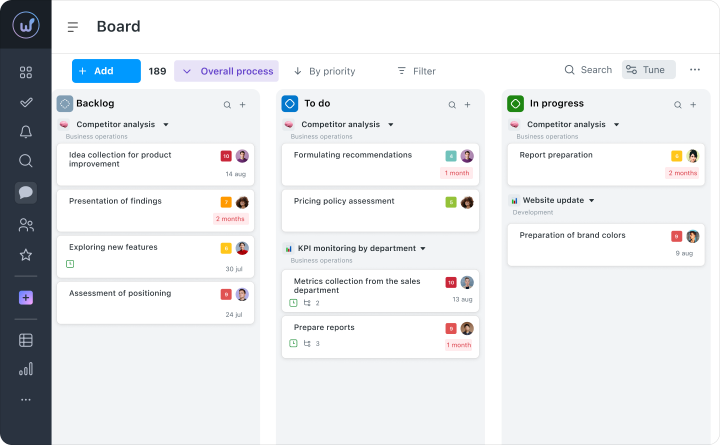
Now we are thinking over the way to start using Task boards. The need for it has really built up. My colleagues often create tasks, and at a definite stage, it becomes necessary to check them, to give feedback. Not to create a task manually in the “check it” style, we can transfer it to the next stage in Task Board.