

Oleg Samchyk, CEO of GEOMETRY‑S, shared with us how his team migrated from Bitrix24 to Worksection in just a week, what main tasks the project management system helps to handle and what is the benefit of Worksection for an engineering company.
Reference:
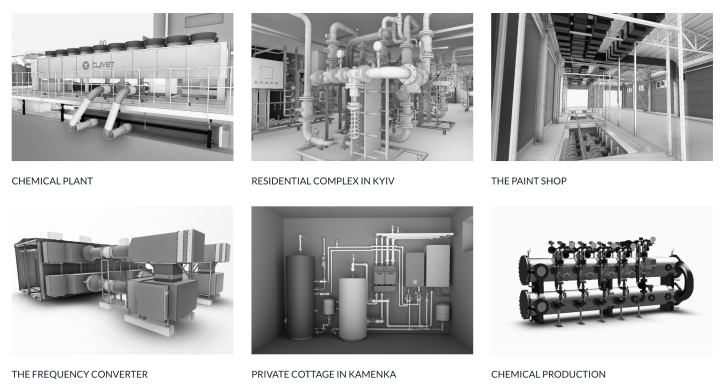
GEOMETRY‑S is a Ukrainian company that designs engineering networks of civil and industrial buildings using BIM technologies (information modeling). The GEOMETRY‑S team has been working on the market since 2012.
Why did you decide to implement a project management service?
The system was actually introduced in 2017. Our team was growing steadily, and so was the number of projects we were running at the same time, so we realized that Google spreadsheets were no longer up to it. That’s how we started working with Bitrix24.
How did you migrate from Bitrix24?
Switching from Bitrix24 to Worksection took up to 1 week. Some difficulties came up while migrating the tasks, because there were so many (more than 8,000), so we had to clean up Bitrix before the migration — delete all the old tasks and keep only the ones relevant to current projects.
Our team, which currently includes 15 engineers and about 10 contractors, is well-coordinated and therefore fully supported the transition. It took several days to set up stages, labels and user accounts. It’s also worth noting that a demonstration of Worksection’s features and settings made the adjustment significantly quicker. In just half an hour, we received answers to all our questions.
How does Worksection help in your work?
The main project tasks have fixed budgets, so it’s very convenient to see a project’s financial reporting — what budget was planned, how it’s distributed, and how much is currently left. Also, for some projects (mainly foreign ones) we have hourly billing, so we use tracking as well. We can set an individual hourly rate for each user (for example, if we have a student on a trial period), which is also convenient.
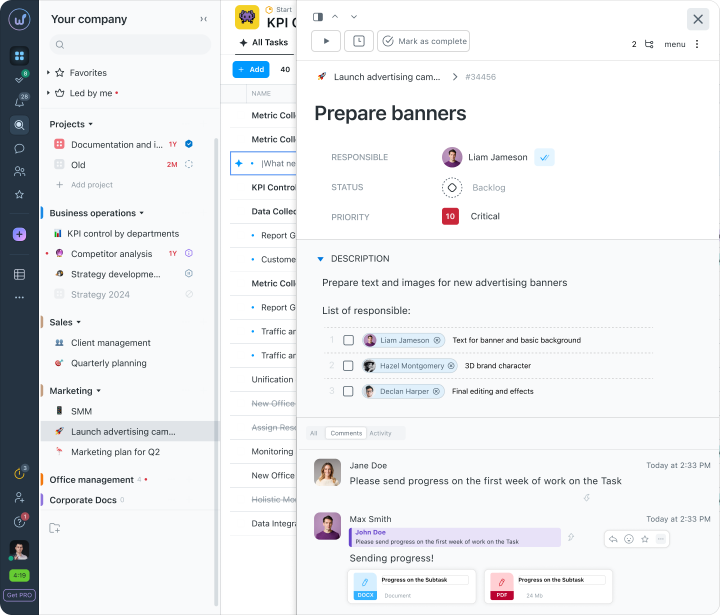
And the most important thing is the task history: you can open the archive at any time and find everything you need in the comments. Our entire company is connected to Worksection, and all work communication happens there.
What is the value of Worksection for an engineering company?
We’re a project office, so our projects cover the entire development cycle of engineering networks and architectural objects — from collecting the client’s initial data to getting the project documentation approved by all the expert bodies.
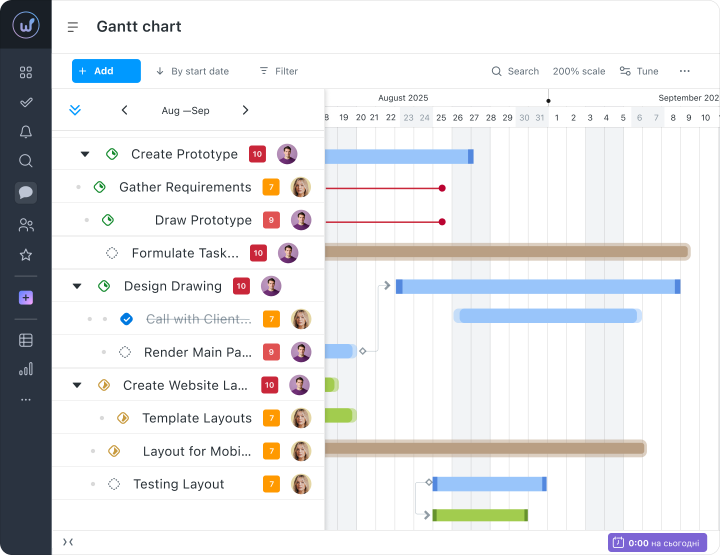
A project’s full cycle involves a large number of tasks. Some can run in parallel, others only sequentially, so a shift in the deadline for one task affects the deadlines of the whole project. This is where we use a Gantt chart: we link the tasks together, adjust them as we go, and see the real picture and the real finish date. This lets us avoid “surprises” and make decisions in advance.
We also involve clients to projects in the system, in particular for projects with hourly rates. The client can see the tracking, participate in the prompt discussion of issues directly in the comments to the tasks, approve and even independently create new tasks for further work. It is a completely transparent communication system that reduces routine work and offers the manager more opportunities for strategic issues.
It is very convenient that the system has integration with Telegram. Currently, 90% of communication in tasks is conducted precisely through the Telegram bot.
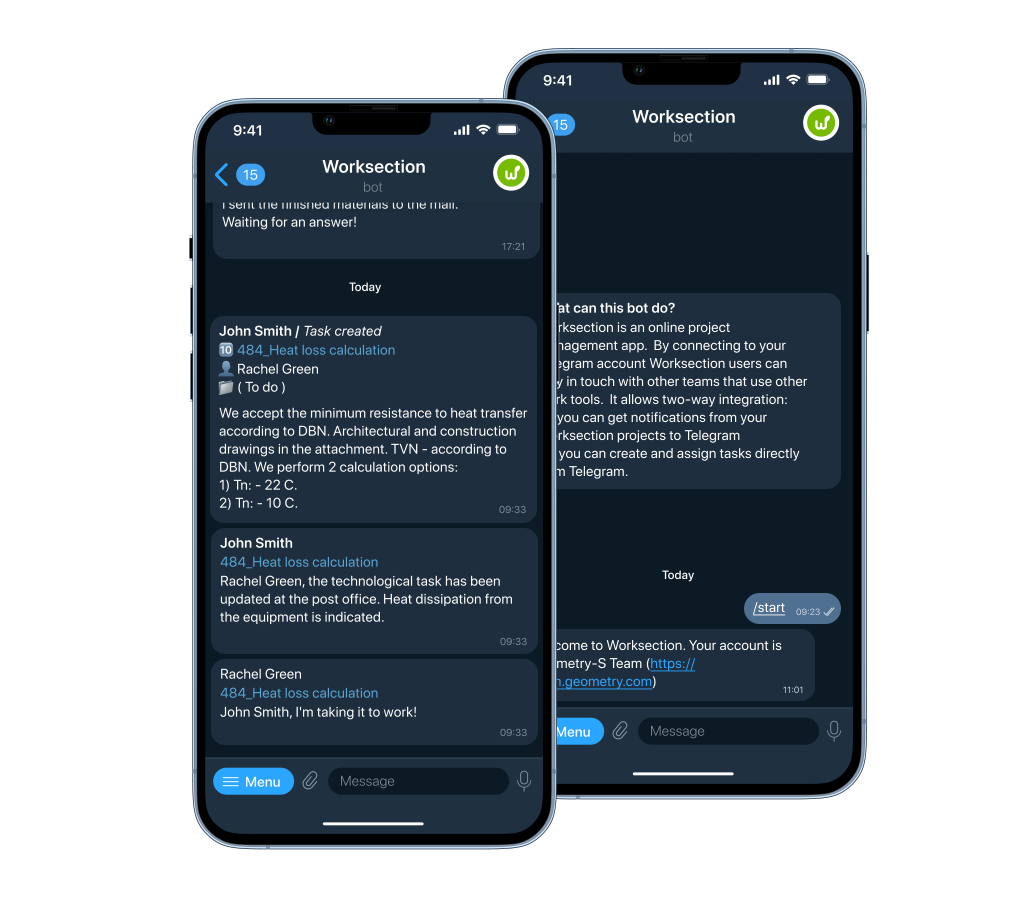
It is very convenient that the system has integration with Telegram. Currently, 90% of communication in tasks is conducted precisely through the Telegram bot.
Do you have internal rules for using Worksection?
Yes, we have a number of internal corporate regulations, particularly for working in Worksection: requirements for naming tasks, filling in the initial data (deadline, effort, budget), the Task Board stages and who is responsible for the stage a task is “moving” through, as well as rules for closing and accepting tasks, and so on.
Would you recommend Worksection to other companies?
Definitely! If you want to grow, sooner or later you’ll face the question of implementing a project management system. So why not do it now? Especially when there’s such a cool Ukrainian product.