
About TIW: The company’s true flagship is DROTR — the first video-call service with real-time automatic translation. Today, DROTR is a fully-fledged messenger that can translate a conversation into 44 languages in call mode and into 100 languages in chat mode.
- The team consists of 70+ people.
- The company operates in 5 countries.
- 12 partners.
- Develops and promotes 7 innovation products.
A tool and an assistant
When you assess Worksection, like any other task manager, it’s important to understand that it’s a tool. And you first have to learn how to use any tool — not just technically, but by properly configuring the company’s entire record-keeping policy. For it to work effectively, you should unify the approaches to it across every department and every team member, so that it becomes a tool for daily, active work.k.
Nobody likes extra reporting. And it’s the manager’s job to get across that Worksection = an assistant in project management. It’s extremely hard to keep everything you need to do in your head. But when you can see the tasks and priorities, there’s no question about what needs to be done and when.
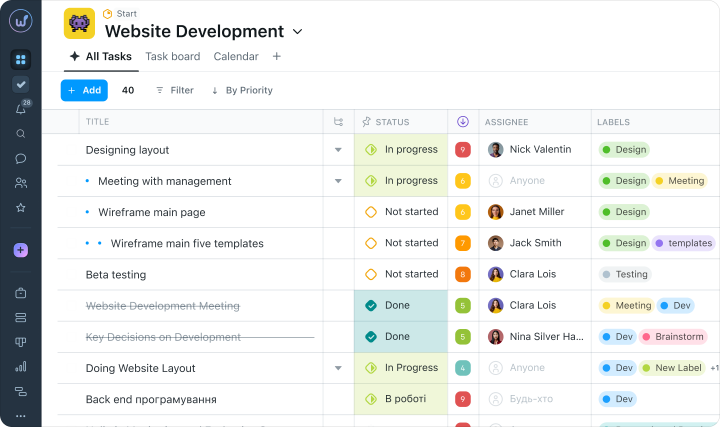
For me, as a manager, it’s always important and convenient to know the status of all the tasks and to receive notifications about every change in good time.
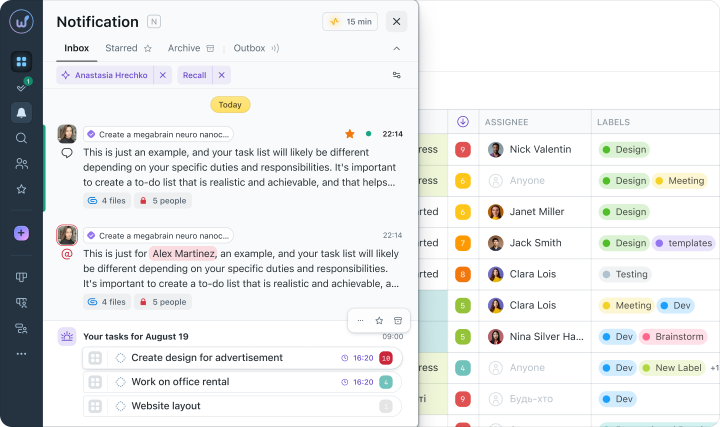
Resources like Worksection deliver real time savings, and that’s hard to overstate. Because, as you go through the stages from getting acquainted with it to using it actively all the time, you come to understand how vital it is. We often don’t notice the conveniences while we have them. It seems like it should always be that way. But the moment you lose them, you realize their full importance.
Honestly, if Worksection stopped working right now for some reason, chaos would break out.
Any task manager can be compared to a circulatory system, with a constant exchange of information and tasks passing from one person to another. Automating these processes speeds them up and improves their efficiency.
We know what to strive for
We used to be involved only in development. But now the scope of what we do is much broader. We have to set up sales, optimize development processes, and actively bring in marketing and PR tools. On top of the technical matters, there are now legal, organizational, recruiting ones, and so on — and that’s within every project. And once you factor in that all our products are interconnected, and each product is a client of another, the need for automated project management is more than obvious.
You can’t do without internal communication. At big companies, entire departments handle things like internal PR, corporate publications, and so on. Our team is still small for that, but we recognize that we need to move in this direction. It’s important that once people have got the hang of one product, they can find their way around the others too — aware of what the whole company does, what the plans are, the motivation, the achievements. After all, we’re a single whole.
For now, each product is handled by a separate team, and we don’t always have time to share experience with each other. Everyone has their own developments and achievements; one person runs into a problem, and someone else has already managed to solve it. So we try to sort out mismatches like these. We’ve even hired a dedicated manager who does nothing but administer Worksection: overseeing task completion, monitoring, and reporting… In fact, we run absolutely everything through WS, except for IT development. That has its own specifics, and we handle it a bit differently.
We decided for ourselves
We didn’t start out working with Worksection right away; we tried other systems and studied them. There were drawbacks and upsides everywhere.
If we settled on WS, it’s because the advantages here clearly won out.