

The Worksection team visited their partners and clients at IBIS. We spoke with Oleksiy Zhmurko and Ivan Samoilov, who not only were at the origins of the company but also independently of each other implemented a project management system for working on and controlling their tasks. Oleksiy and Ivan shared how their departments grew and the complexity of tasks, and how Worksection helps them in all of this.
The online store and everything connected to it started with content. A colossal amount of work came before us — writing everything that was missing in the company.
A little background:
IBIS is the largest operator of wholesale and retail trade in goods for hunting, fishing, and active recreation, a supplier of products from global manufacturers. The product range in the “IBIS” stores consists of over 80,000 items from 715 leading manufacturers worldwide. 10 of its own stores in Kyiv, Dnipro, Odesa, and Lviv.
Oleksiy Zhmurko — head of the internet sales department at IBIS.
Ivan Samoilov — product manager and chief developer of the Favorit brand, an international manufacturer of fishing tackle for catching predatory fish with headquarters in Ukraine, the USA, and Japan.
Tell us about the projects of the IBIS team

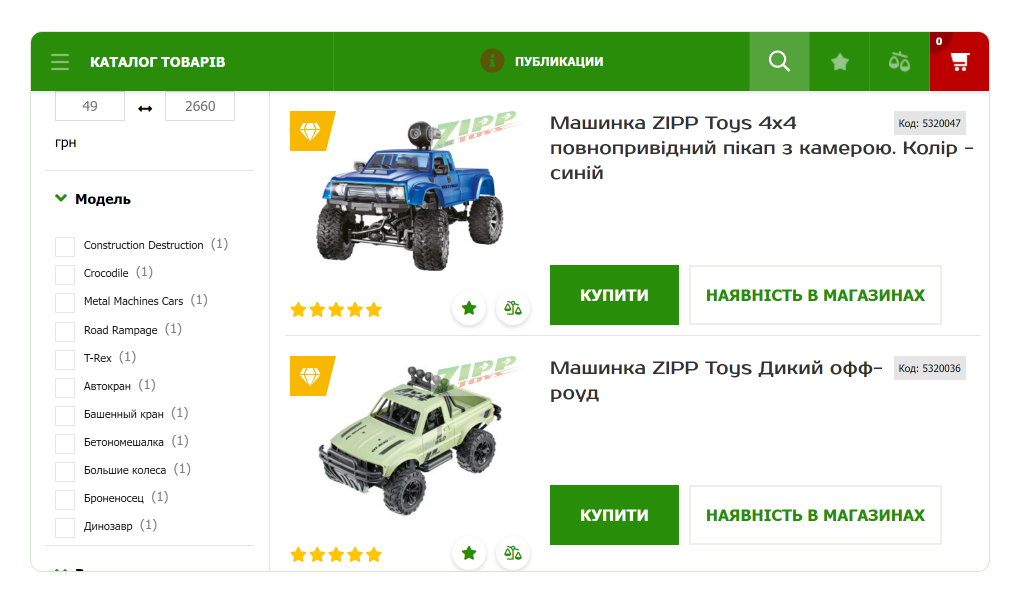
Speaking of the content department, these are projects related to content and marketing. The latest we can mention are toys — a new direction for us, a new target audience, and a new approach to the client.

These are projects related to product development, design, and marketing. Moreover, separate projects are created for all of this. And for each brand, accordingly.
Why did you decide to implement a task tracker?

At some point, I realized that we could organize the process properly, because pen and paper just isn’t good enough
Sooner or later, any team realizes that without additional software, it stops growing.

Our company started small, but it quickly grew to large volumes.At that point, Google services, email, and spreadsheets were no longer enough for us. And when we entered the U.S. market, we began essentially to create a brand from scratch, as the assortment in the States is completely different from ours. At that time, a lot of projects needed to be sorted out.
When there were three or four of us in the team, tasks could be assigned verbally. But as the company started to grow the need to control and plan our activities arose.
How did you choose Worksection?

The choice of the software product was very long: we tried Megaplan, Todoist, and Bitrix. For me, it was important to choose a product that is constantly improving, so in 2013 we settled on Worksection. Now I can’t imagine our work without this task tracker.
What projects does Worksection help manage?

With the implementation of Worksection for projects in the American market, we started using it for all projects. We have a development and design department, and they all use Worksection in their work.
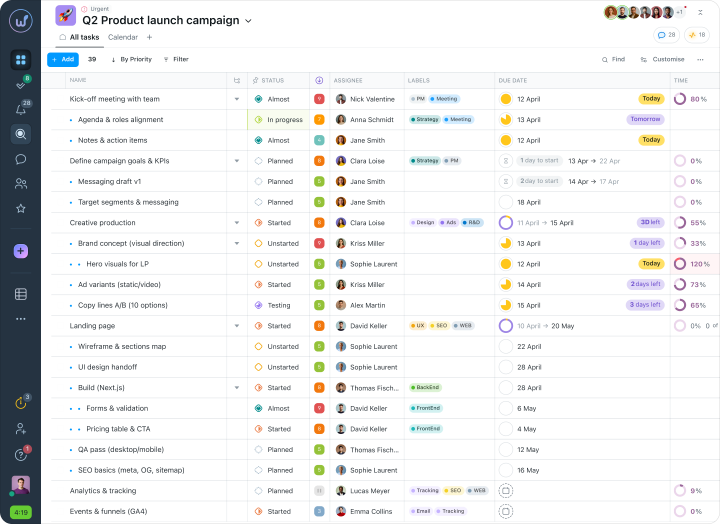
What tools of the task tracker do you use?

The Task Board suits us really well since it lets us mark out several stage in the product development.
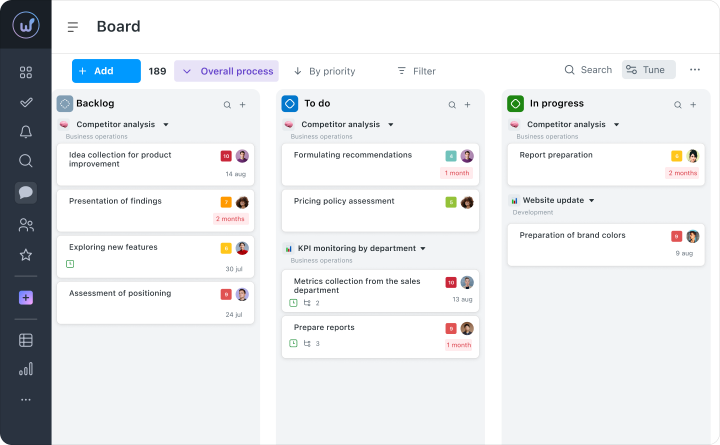

The Task Board shows me everything visually. Thanks to it, I understand what is assigned, what is in progress, and what is in release. Visualizing everything that happens is a strong point of Worksection.
What helps to close tasks on time?

The main thing is to set goals correctly, not deadlines. In our work, we release the product when it is ready for release because we work from a goal, not from a deadline.

The employee’s attitude toward work, the ideology that lives inside the department and that is carried by the leader.
There definitely must be order and control. But the attitude of the person doing the work is very important.
How much does the manager influence task execution?

We should strive to understand people’s needs and communicate regularly.
How to launch your own brand

First of all, you need to thoroughly study the field in which you plan to launch the project. If it concerns a product, the main principle is to understand why this product is needed in the market.
TOP 3 tips on how not to miss deadlines

- The first is to check and be sure that all participants in the process are aware of the tasks assigned to them, and not guessing them.
- The second is preventive work with the team, making sure everyone understands what they’re doing and why.
- The third is a motivating/demotivating factor, which is a very important aspect of organizing work. People should have the motivation to do something and demotivation to avoid doing something.